English Version
Preprint Release
Toward a Unified Theory of Switching:
Constraint Geometry, Hierarchical Reorganization, and Gait Transitions
Akira Minegishi
This paper proposes a Unified Switching Theory by integrating four previously developed frameworks:
• SCAN
• Viable System Model (VSM)
• Constraint Geometry
• 3D Minimal Model
and demonstrating their underlying structural equivalence.
The paper argues that diverse switching phenomena can be described through a common five-stage structure:
1. Stable mode
2. Destabilization
3. Boundary-region traversal
4. Transition pathway
5. Re-stabilization
which appears across multiple theoretical traditions.
Based on this structural equivalence, the paper introduces three central principles:
• increase in task-irrelevant variability (Var⊥),
• traversal of a boundary (liminal) region,
• geodesic transition toward a new stable mode. ________________________________________
PDF Download
Toward a Unified Theory of Switching
📄 Download PDF
________________________________________
Overview
The paper addresses a simple but fundamental question:
Do seemingly different switching phenomena share a common structural organization?
The proposed framework extends beyond locomotor transitions and explores possible applications to:
• motor coordination,
• skill acquisition,
• cognitive mode switching,
• organizational restructuring,
• adaptive systems more generally. Paper5_arXiv_Preview_REVISED (pdf)
________________________________________
Figure 1
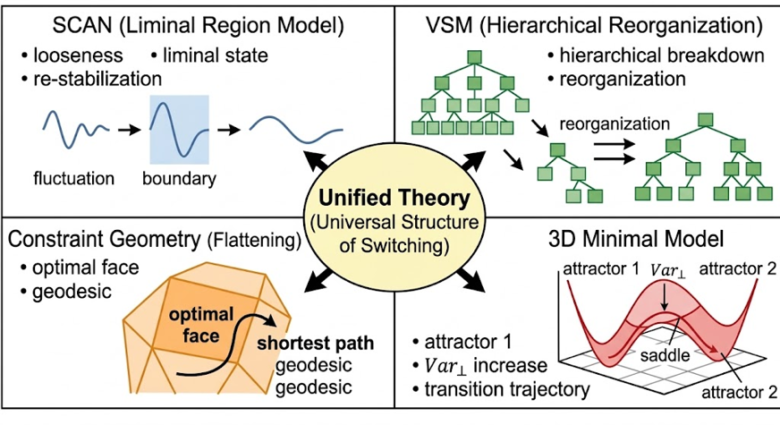 Figure 1. Overview of the Unified Switching Theory
The figure illustrates how SCAN, VSM, Constraint Geometry, and the 3D Minimal Model can be interpreted as complementary representations of a common switching structure.
________________________________________
Position Within the Switching Science Project
This paper serves as an important conceptual bridge toward the later development of the Switching Science research program.
Its primary contribution is the proposal that switching phenomena across domains may share a common structural foundation, providing a basis for future cross-domain investigations of adaptive transitions.
*****
link => Paper 6 (Preprint)
+++++
日本語版
論文5 プレプリント公開
Toward a Unified Theory of Switching:
Constraint Geometry, Hierarchical Reorganization, and Gait Transitions
Akira Minegishi
本研究は、歩行から走行への切替研究を出発点として、
• SCAN
• VSM(Viable System Model)
• Constraint Geometry
• 3D Minimal Model
という4つの理論的枠組みの間に共通する構造を明らかにし、それらを統合した Unified Switching Theory(統合切替理論) を提案するものです。
本論文では、
1. 安定状態
2. 不安定化
3. 境界領域(Liminal Region)
4. 遷移経路
5. 再安定化
という5段階構造が、異なる理論の背後に共通して存在することを示します。
さらに、
• Task-Irrelevant Variability(Var⊥)
• 境界領域の通過
• Geodesic(最短経路)遷移
を統合切替理論の中核原理として提案しています。
________________________________________
PDF Download
Toward a Unified Theory of Switching
📄 論文PDFダウンロード
________________________________________
概要
本論文は、
「異なるシステムに見られる切替現象は、共通する構造を持つのではないか」
という問いに対する理論的提案です。
対象は歩行・走行の切替にとどまらず、
• 運動協調
• スキル獲得
• 認知モード切替
• 組織再編
など、多様な適応システムへと拡張されています。
________________________________________
Figure 1
Figure 1. Overview of the Unified Switching Theory
SCAN、VSM、Constraint Geometry、3D Minimal Model は、それぞれ異なる視点から同一の切替構造を記述していると解釈されます。
________________________________________
位置づけ
本論文は、後続の Switching Science 研究プログラムに至る理論的な橋渡しとして位置づけられます。
切替現象に共通する構造を明らかにし、分野横断的な「切替の科学」の可能性を提示することが本研究の目的です。
****
リンク => 論文6のプレプリント原稿
+++++
(著者) 峯岸 瑛(みねぎし あきら)
(公開日)2026年10月20日