Switching Science Version 1.0 Released
October 20, 2026
Switching Science:
A Testable Stochastic-Dynamical Framework for Locomotor Transitions
Today, I am pleased to release Switching Science Version 1.0.
Switching Science is a research program that begins with locomotor transitions but extends toward a broader scientific question:
How do adaptive systems leave one organized state, traverse an intermediate transition region, and stabilize in another?
The Version 1.0 package integrates theoretical, mathematical, experimental, and validation components into a unified scientific framework.
Rather than presenting a completed theory, Switching Science is proposed as a testable, falsifiable, and revisable research program.
________________________________________
Download
Switching Science Preprint Package Version 1.0
Paper 6 + Supplements 1–4
📄 PDF Download
________________________________________
Overview
Switching Science investigates adaptive state transitions through a unified framework that integrates:
• Stochastic dynamics
• Transition-region geometry
• Hierarchical control
• Dynamical phenotypes
• Experimental perturbation
• Multimodal measurement
• Validation and model revision
The framework does not assume that its proposed mechanisms are already established.
Instead, it defines a scientific architecture through which competing explanations can be tested, compared, falsified, and revised.
Its central philosophy is:
Theory → Prediction → Measurement → Perturbation → Evaluation → Revision
________________________________________
Figure 0
Integrated Research Architecture of Switching Science
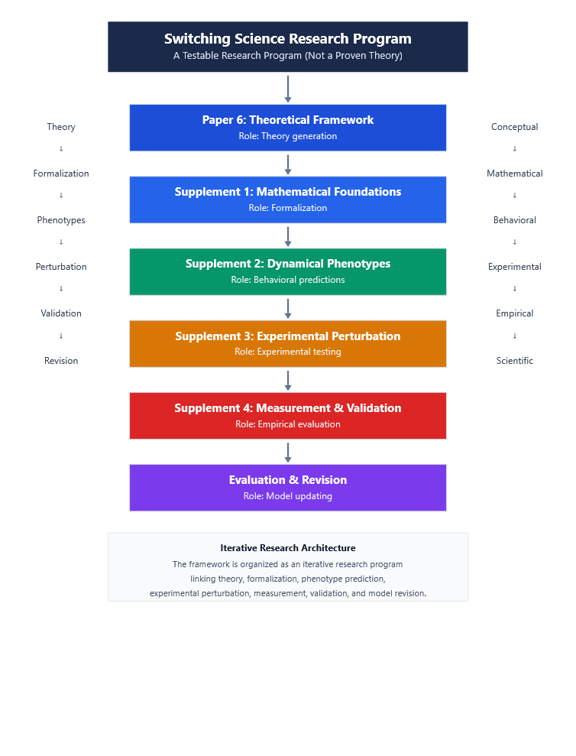 Figure 0. Integrated Research Architecture of Switching Science
The Switching Science framework proposes that adaptive state transitions can be investigated through a unified sequence of theory, formalization, phenotype generation, perturbation, measurement, validation, and revision.
Figure 0 serves as the conceptual roadmap for the entire Version 1.0 package.
Paper 6 introduces the overall framework, while Supplements 1–4 develop the mathematical foundations, phenotype concepts, perturbation logic, and validation architecture that support empirical evaluation and future revision.
________________________________________
What Is Switching Science?
At its core, Switching Science proposes that transitions between organized states can be studied through a common scientific architecture:
Theory
↓
Transition Dynamics
↓
Gear 2
↓
SCAN Modulation
↓
A-C Reduced Models
↓
Dynamical Phenotypes
↓
Experimental Perturbation
↓
Multimodal Measurement
↓
Validation
↓
Model Revision
Each layer generates testable predictions.
Measurements evaluate those predictions.
Experimental perturbations challenge candidate mechanisms.
Observed outcomes then guide refinement or revision of the framework.
In this sense, Switching Science is not simply a theoretical proposal.
It is a structured research program for investigating adaptive transitions.
________________________________________
Contents of Version 1.0
________________________________________
Paper 6
Switching Science: A Testable Stochastic-Dynamical Framework for Locomotor Transitions
Paper 6 presents the integrative theoretical architecture of Switching Science.
Major topics include:
• Stochastic transition dynamics
• Gear 2 transition regions
• Minimum Action Paths (MAPs)
• Hierarchical SCAN control
• Dynamical phenotypes
• Experimental perturbation
• Measurement and validation
This document serves as the conceptual foundation for the entire research program.
________________________________________
Supplement 1
Mathematical Foundations of the Switching Framework
Supplement 1 develops the mathematical framework underlying the theory.
Topics include:
• Stochastic differential equations
• Freidlin-Wentzell theory
• Minimum Action Paths (MAPs)
• Transition-region geometry
• Candidate SCAN modulation
• A-C reduced models
The supplement distinguishes established mathematics from model-dependent locomotor applications.
________________________________________
Supplement 2
Dynamical Phenotypes of Switching Impairment
Supplement 2 introduces a phenotype-based approach to switching dynamics.
Four candidate dynamical phenotypes are proposed:
• Rigid
• Fixed
• Unstable
• Noisy
These are not diagnostic categories.
Instead, they are treated as prototype regions within a continuous phenotype space capable of generating testable predictions.
________________________________________
Supplement 3
Experimental Perturbation of Switching Dynamics
Supplement 3 converts intervention concepts into an experimental perturbation framework.
Topics include:
• AC-MAP
• Standard Pole Walking (SPW)
• Perturbation logic
• Causal testing strategies
• Phenotype-dependent predictions
Candidate perturbations are treated as experimental probes rather than validated interventions.
________________________________________
Supplement 4
Multimodal Measurement and Validation of Switching Dynamics
Supplement 4 develops the measurement and validation architecture of the framework.
Topics include:
• Multimodal measurement
• Construct validation
• Measurement Validity
• Model Validity
• Intervention Validity
• Three-Gate Validation Architecture
The supplement provides the empirical structure through which Switching Science can be evaluated and revised.
________________________________________
Scientific Status
Switching Science should be interpreted as a research program rather than a completed theory.
The framework contains:
• Candidate mathematical formulations
• Candidate control dimensions
• Candidate dynamical phenotypes
• Candidate perturbation mechanisms
• Candidate measurement architectures
Their value lies not in being assumed correct, but in being:
• Testable
• Measurable
• Comparable
• Falsifiable
• Revisable
The purpose of Version 1.0 is to establish a transparent foundation for future empirical evaluation.
________________________________________
Why Locomotor Transitions?
Locomotor switching provides a tractable model system for studying a broader scientific question:
How do adaptive systems transition between organized states?
Walking-to-running transitions, motor adaptation, state-dependent control, and stochastic dynamical behavior offer an experimentally accessible domain in which such questions can be investigated.
The longer-term aim is to determine whether common principles of switching may extend beyond locomotion and apply to adaptive systems more generally.
________________________________________
Closing Remarks
Switching Science Version 1.0 represents the first integrated presentation of the research program.
The framework links:
• stochastic dynamics,
• transition geometry,
• candidate control dimensions,
• dynamical phenotypes,
• experimental perturbation,
• multimodal measurement,
• hierarchical validation,
• and iterative scientific revision.
Its future direction will depend on empirical testing, alternative-model comparison, replication, and continued revision.
The goal is not to defend a particular model.
The goal is to develop a systematic scientific approach for understanding switching dynamics across adaptive systems.
________________________________________
Download the complete Version 1.0 Preprint Package above.
Web editions with MathJax-supported equations will be released progressively in future updates.
Make it more concise for the websiteFormat this as HTMLAdd a brief author bio
________________________________________
Related Preprint
From Unified Switching Theory to Switching Science
The present Version 1.0 framework builds upon an earlier theoretical study:
Toward a Unified Theory of Switching: Constraint Geometry, Hierarchical Reorganization, and Gait Transitions
This earlier work explored structural correspondences among SCAN, the Viable System Model (VSM), Constraint Geometry, and the 3D Minimal Model, and proposed a Unified Switching Theory framework.
While the earlier preprint focused on theoretical integration, the present Switching Science framework extends those ideas into a broader research program involving mathematical formalization, dynamical phenotypes, perturbation-based hypothesis testing, multimodal measurement, validation, and iterative revision.
Download
📄 Toward a Unified Theory of Switching (PDF)
****日本語版****
Switching Science Version 1.0 公開
October 20, 2026
Switching Science:
A Testable Stochastic-Dynamical Framework for Locomotor Transitions
本日、Switching Science Version 1.0 を公開します。
Switching Science は、歩行・走行などの運動切替現象を出発点として、
• 状態遷移
• 適応
• 学習
• 制御
• 計測
• 検証
を統一的に扱うための研究プログラムです。
本バージョンでは、
• 理論的枠組み
• 数理モデル
• 動的表現型
• 実験的摂動
• マルチモーダル計測
• 妥当性検証
を一つの体系として整理しました。
________________________________________
Download
Switching Science Preprint Package Version 1.0
Paper 6 + Supplements 1–4
PDFダウンロード
________________________________________
Overview
Switching Science は、
「適応システムはいかにして一つの安定状態から別の安定状態へ移行するのか」
という問題を扱います。
本研究では、状態遷移を
• 確率過程
• 状態空間幾何
• 制御階層
• 実験摂動
• 計測
• 検証
の統合問題として捉えます。
本研究プログラムの特徴は、
特定のモデルの正しさを主張するのではなく、
仮説生成 → 測定 → 比較 → 反証 → 修正
を中心に据えている点です。
Switching Science は完成理論ではなく、
検証可能で修正可能な研究プログラムとして提案されています。
________________________________________
Figure 0
Integrated Research Architecture of Switching Science
Figure 0. Integrated Research Architecture of Switching Science
The Switching Science framework proposes that adaptive state transitions can be studied through a unified sequence of theory, formalization, phenotype generation, perturbation, measurement, validation, and revision.
________________________________________
What Is Switching Science?
本研究プログラムの中心的な考え方は、
Theory
↓
Transition Dynamics
↓
Gear 2
↓
SCAN Modulation
↓
A-C Reduced Models
↓
Dynamical Phenotypes
↓
Experimental Perturbation
↓
Multimodal Measurement
↓
Validation
↓
Model Revision
という研究サイクルです。
理論は測定によって評価され、
測定は実験によって検証され、
結果は理論へフィードバックされます。
したがって Switching Science は、
「理論の提示」
ではなく、
「理論をどのように検証し修正していくか」
を含む研究プログラムとして構成されています。
________________________________________
Contents of Version 1.0
Paper 6
Switching Science:
A Testable Stochastic-Dynamical Framework for Locomotor Transitions
研究プログラム全体の統合理論。
• 状態遷移の確率論的記述
• Gear 2 仮説
• MAP(Minimum Action Path)
• SCAN階層
• 動的表現型
• 実験と検証
を統合した中心論文です。
________________________________________
Supplement 1
Mathematical Foundations of the Switching Framework
数理基盤を扱います。
主な内容:
• 確率微分方程式
• Freidlin-Wentzell理論
• Minimum Action Path
• 遷移領域(Gear 2)
• SCAN変調仮説
• A-C Reduced Model
________________________________________
Supplement 2
Dynamical Phenotypes of Switching Impairment
状態遷移障害を動的表現型として整理します。
提案する4つの表現型:
• Rigid
• Fixed
• Unstable
• Noisy
疾患分類ではなく、
状態遷移ダイナミクスとして障害を理解する枠組みを提示します。
________________________________________
Supplement 3
Experimental Perturbation of Switching Dynamics
理論の実験的検証を扱います。
主な内容:
• AC-MAP
• Standard Pole Walking (SPW)
• 摂動実験
• 因果仮説
• 動的表現型別予測
介入ではなく、
仮説検証のための実験摂動として位置付けています。
________________________________________
Supplement 4
Multimodal Measurement and Validation of Switching Dynamics
計測と検証を扱います。
主な内容:
• マルチモーダル計測
• Measurement Validity
• Model Validity
• Intervention Validity
• Three-Gate Validation Architecture
研究プログラム全体を支える妥当性評価の枠組みです。
________________________________________
Scientific Status
Switching Science は完成理論ではありません。
Version 1.0 は、
現時点で考え得る理論・数理・測定・検証の統合構造を提示したものです。
本研究プログラムの価値は、
すべての仮説が正しいことではなく、
それらが
• 測定可能であること
• 反証可能であること
• 比較可能であること
• 修正可能であること
にあります。
________________________________________
Closing Remark
Switching Science は、
歩行切替研究から出発しています。
しかし本質的には、
適応システムがどのように状態を切り替えるのかという、
より一般的な問題を扱う研究プログラムです。
Version 1.0 は、その最初の統合的な提案です。
今後は理論の改良だけでなく、実験的検証と測定体系の構築を通じて、継続的に発展させていく予定です。
________________________________________
関連プレプリント
統合切替理論から Switching Science へ
Switching Science Version 1.0 は、
以下の理論研究を出発点として発展しました。
Toward a Unified Theory of Switching: Constraint Geometry, Hierarchical Reorganization, and Gait Transitions
この研究では、
• SCAN
• VSM
• Constraint Geometry
• 3D Minimal Model
に共通する構造を整理し、
「統合切替理論(Unified Switching Theory)」
を提案しました。
今回公開する Switching Science は、その理論統合を土台として、
• 数理化
• 動的表現型
• 実験的摂動
• マルチモーダル計測
• 妥当性検証
• 理論修正
まで含めた研究プログラムへ拡張したものです。
PDFダウンロード
📄 Toward a Unified Theory of Switching
(著者) 峯岸 瑛(みねぎし あきら)
(公開日)2026年10月20日